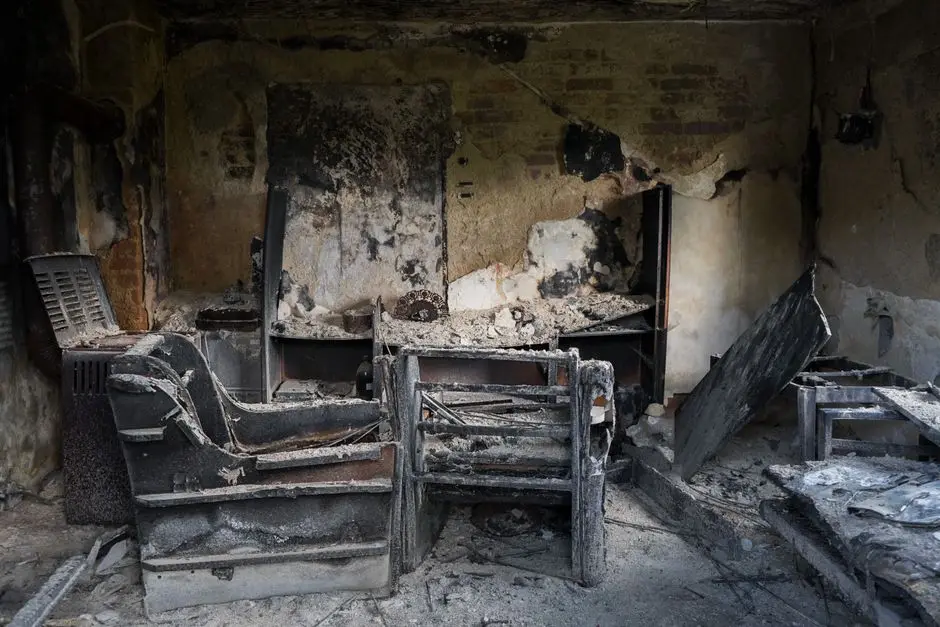
Your house still smells like smoke after a fire because the odor molecules are trapped in porous materials - drywall, insulation, wood framing, upholstery, carpet padding, and the HVAC system - not because the air hasn't cleared. Opening windows for a week will not fix it. The smell is coming from surfaces and cavities, and it keeps off-gassing every time humidity rises or the furnace kicks on. This post explains exactly where smoke hides in a TUJUNGA home, how long the smell lasts, and the steps that actually remove it.
Smoke smell after a fire in TUJUNGA is a restoration problem, not a cleaning problem. The residue that causes it is acidic soot and vaporized synthetic compounds that soaked into building materials during the fire and are now releasing gas at room temperature. Until those materials are cleaned, sealed, or removed, the odor returns.
Why does my house still smell like smoke after a fire in TUJUNGA, California
Smoke odor after a fire in TUJUNGA, California, persists because combustion byproducts penetrate materials that normal cleaning cannot reach. Three things drive it: porous surfaces absorbing smoke, HVAC circulation spreading residue through the whole house, and humidity reactivating dried smoke compounds.
When a fire burns, it releases particles smaller than 2.5 microns along with gases like acrolein, formaldehyde, and benzene. Those particles lodge in drywall paper, wood grain, fabric fibers, and duct lining. Every time relative humidity climbs above about 55% - common in the San Fernando Valley during winter rain and summer monsoon moisture - those compounds release vapor again. That is why the smell seems to come back out of nowhere weeks later.
TUJUNGA adds its own wrinkle. A large share of the housing stock here was built between 1920 and 1970, which means original wood lath, plaster walls, and unlined ductwork. Plaster and old wood absorb smoke far more deeply than modern drywall and OSB. We see this constantly in Sunland-Tujunga fire damage restoration jobs where the visible char is minor but the odor is severe.
The five places smoke hides in a TUJUNGA house
Smoke residue in a TUJUNGA house concentrates in five predictable locations, and missing any one of them means the smell comes back. Here is where our technicians look first.
1. Wall cavities and insulation
Smoke travels through outlet boxes, switch plates, and gaps around plumbing penetrations. It deposits on the back side of drywall and inside batt insulation. No amount of surface wiping reaches it. In older TUJUNGA homes with plaster, the scratch coat acts like a sponge.
2. The HVAC system and ductwork
When the air handler runs during or after a fire, it pulls smoke into the return and coats the inside of every supply run. Flexible duct liner and fiberglass duct board trap odor permanently. This is the single most common reason a house still smells like smoke three months later - the ducts were never addressed. If your system was running, plan on duct cleaning or replacement, not just a filter change.
3. Attics and roof decking
Heat and smoke rise. Attic insulation, rafters, and the underside of roof sheathing absorb residue even when the fire was on the first floor. Attic fires are especially stubborn because the confined space concentrates soot. Our attic fire damage repair TUJUNGA crews treat the attic as a separate containment zone for exactly this reason.
4. Soft furnishings and textiles
Mattresses, sofas, curtains, carpet and pad, clothing, and even books hold smoke. Some can be saved with thermal fogging and ozone treatment. Many cannot, and pretending otherwise wastes weeks. We tell homeowners straight: if a mattress was in a smoke-filled room for days, replace it.
5. Subfloor and framing
Water from firefighting soaks into subfloor and wall framing, and smoke residue dissolves into that moisture. As the wood dries, odor releases slowly. This is why the smell often gets worse in the two weeks after the fire rather than better.
How long does smoke smell last after a fire in TUJUNGA
Smoke smell lasts two to four weeks in a minor, well-ventilated fire with no HVAC involvement, and six months to two years or longer when residue is trapped in ducts, insulation, or wall cavities. The difference is almost never the size of the fire. It is whether the hidden reservoirs were treated.
We have walked into TUJUNGA homes a year after a kitchen fire where the homeowner had scrubbed every visible surface and the smell was still strong in the hallway. The cause was a 12-foot run of flex duct that had been carrying smoke every time the heat came on. Once the duct was replaced and the coil cleaned, the odor was gone in 48 hours.
Humidity is the other variable. A house that reads clean in July can smell like a campfire in January after three days of rain. If your odor is seasonal, that is your clue that residue is in porous material, not in the air.
How to get smoke smell out of house after fire near me in TUJUNGA
Getting smoke smell out of a house after a fire near you in TUJUNGA follows a sequence, and doing the steps out of order wastes money. The order matters more than the products.
- Remove the source. Charred debris, ruined insulation, and unsalvageable textiles come out first. No deodorizer beats a source that is still in the room.
- Dry the structure. Firefighting water trapped in framing keeps odor active. Structural drying comes before odor treatment, always.
- Clean surfaces with the right chemistry. Protein smoke from kitchen fires needs alkaline cleaners. Wood and synthetic smoke needs different chemistry. One product for everything does not work.
- Treat cavities and ducts. HEPA vacuuming, duct cleaning, and where needed, duct replacement.
- Seal what cannot be cleaned. A shellac-based primer on framing and drywall blocks residual off-gassing.
- Treat the air last. Thermal fogging and hydroxyl or ozone treatment are finishing steps, not substitutes for cleaning.
For a full breakdown of the cleaning stage, see our smoke damage cleanup TUJUNGA service page. If the fire was recent and the site is still wet or unsafe, start with emergency fire restoration TUJUNGA so the structure is stabilized before odor work begins.
One more thing worth knowing: if the fire was electrical, the residue is different and often more toxic. Our electrical fire damage restoration TUJUNGA team handles those jobs with additional PPE and air scrubbing because the burned insulation and wire jacket compounds are harder to neutralize.
Common mistakes that keep the smell around
The most common mistake homeowners make after a fire is treating the air instead of the surfaces. Air fresheners, candles, and bowls of vinegar do nothing to residue in drywall. They mask it for a few hours and then it returns.
Other mistakes we see repeatedly in TUJUNGA:
- Running the HVAC to "air out" the house. This spreads soot through every duct and room. If the system was exposed to smoke, keep it off until it is cleaned.
- Painting over smoke-stained walls without sealing. Standard latex paint does not block odor. It will bleed through within weeks. You need a shellac or oil-based stain-blocking primer first.
- Washing walls with water only. Soot smears and drives deeper into porous surfaces. Dry removal with HEPA vacuums comes first.
- Assuming the smell will fade on its own. It fades, then returns with the first humid week. That cycle can run for years.
- Throwing away furniture that could be saved. Upholstery and wood furniture often respond well to professional treatment. Our furniture fire damage repair TUJUNGA service saves pieces homeowners assume are gone.
When to call a professional
Call a professional when the smell persists past two weeks, when the HVAC system ran during the fire, or when anyone in the house has headaches, irritated eyes, or a cough that started after the fire. Those are signs of active off-gassing, not a cleaning problem you can solve with a bucket.
We are Fire Damage Restoration Tujunga, and we handle Fire Damage Restoration across the foothill neighborhoods - from canyon properties to older bungalows near downtown. Our technicians use moisture meters, thermal imaging, and air sampling to find where the odor is actually coming from before we quote the work. You get a clear scope and a price before anything starts.
If you are in a canyon area where wind-driven smoke pushed deeper into the structure, our Tujunga Canyon fire damage restoration team knows the specific construction patterns up there - pier-and-beam foundations, wood siding, and unlined attics that trap residue differently than tract homes on the flats.
Frequently Asked Questions
Why does my house still smell like smoke after a fire in TUJUNGA?
Because smoke residue is trapped in porous materials - drywall, insulation, wood framing, upholstery, and HVAC ducts - and keeps releasing odor as humidity and temperature change. Surface cleaning does not reach it. TUJUNGA's older plaster and wood-lath construction absorbs smoke more deeply than modern drywall.
How long does smoke smell last after a fire in TUJUNGA California?
Two to four weeks for a minor fire with no HVAC exposure. Six months to two years or more if residue is in ducts, wall cavities, or insulation. The determining factor is whether hidden reservoirs were treated, not the size of the fire.
Can smoke smell make you sick in TUJUNGA?
Yes. Lingering smoke odor means combustion particles and gases like acrolein and formaldehyde are still present. Symptoms include headaches, eye and throat irritation, coughing, and worsened asthma. Children, older adults, and anyone with respiratory conditions are at highest risk. If symptoms persist, leave the home and get it assessed.
How do I get rid of smoke smell in my house in TUJUNGA?
Remove the source, dry the structure, clean surfaces with the correct chemistry for the smoke type, clean or replace ductwork, seal porous framing with a shellac primer, then treat the air with thermal fogging or hydroxyl generators. Order matters - air treatment alone will not work.
Who removes smoke odor near me in TUJUNGA California?
Fire Damage Restoration Tujunga removes smoke odor across TUJUNGA and the surrounding foothill neighborhoods. We locate the residue with thermal imaging and air sampling, then clean, seal, and treat until the odor is gone - not masked. Call (833) 929-6186.
Get help with Fire Damage Restoration in TUJUNGA
If your house still smells like smoke weeks after the fire, the residue is still there and it will not leave on its own. We find it, remove it, and verify the air is clean before we call the job done.
Call Fire Damage Restoration Tujunga at (833) 929-6186 for an assessment. We serve TUJUNGA and the surrounding foothill communities, and we answer the phone 24 hours a day.